Once a Year, Open the Mirror: A Household Guide to Medicine Cabinet Safety
Behind most bathroom mirrors in American homes sits a small museum of good intentions: a half-finished course of antibiotics from 2021, cough syrup that expired before your child started middle school, a bottle of aspirin with a label you can no longer read. It is easy to ignore. It is also, according to poison control data, one of the more common sources of accidental ingestion in the home.
We recommend our patients treat the medicine cabinet the way they treat smoke detector batteries — as a once-a-year maintenance task with a fixed date. Below is a practical walkthrough of how to do it well.
Why an Annual Audit Matters
Medications do not remain safe indefinitely. Active ingredients degrade, and some expired drugs lose potency precisely when you need them most, such as epinephrine auto-injectors and certain heart medications. Expired tetracycline-class antibiotics are a well-documented concern. Beyond effectiveness, leftover prescriptions — particularly opioids and other controlled substances — are a leading pathway to misuse in American households, often by teenagers or guests rather than the original patient.
Households with young children or grandchildren carry additional stakes. Curious toddlers climb, open, and taste. Child-resistant caps slow children down; they do not stop them.
Step One: Take Everything Out
Empty the cabinet completely onto a towel. Check drawers, travel kits, purses, and the kitchen junk drawer where pain relievers tend to migrate. A proper audit only works if you see the full inventory.
For each item, check three things:
- The expiration date. If it has passed, set it aside for disposal. If the label is illegible, assume it is expired.
- Whether it is still yours to keep. A finished course of antibiotics has no business staying in your home. The same applies to discontinued prescriptions.
- Its condition. Discolored tablets, cloudy liquids, crumbling pills, or anything with an unusual smell should go, regardless of date.
Step Two: Dispose of Medications Safely — Not in the Toilet
The old advice to flush expired drugs down the toilet is outdated for most medications. Flushing can introduce pharmaceutical compounds into waterways, and wastewater treatment is not designed to filter them out.
The preferred route is a drug take-back program. Many pharmacies — including national chains — maintain permanent disposal kiosks, and each spring and fall the DEA sponsors National Prescription Drug Take Back Days at locations across the country. Your local police department or county health department can also point you to drop-off sites.
If no take-back option is available, the FDA advises mixing pills with something unappealing — used coffee grounds or cat litter — sealing the mixture in a bag or disposable container, and placing it in household trash. A handful of medications, including certain potent opioids, remain on the FDA's flush list because the overdose risk outweighs environmental concerns; check the packaging insert or the FDA website.
Before discarding any container, black out personal information on the label.
Step Three: Restock With Purpose
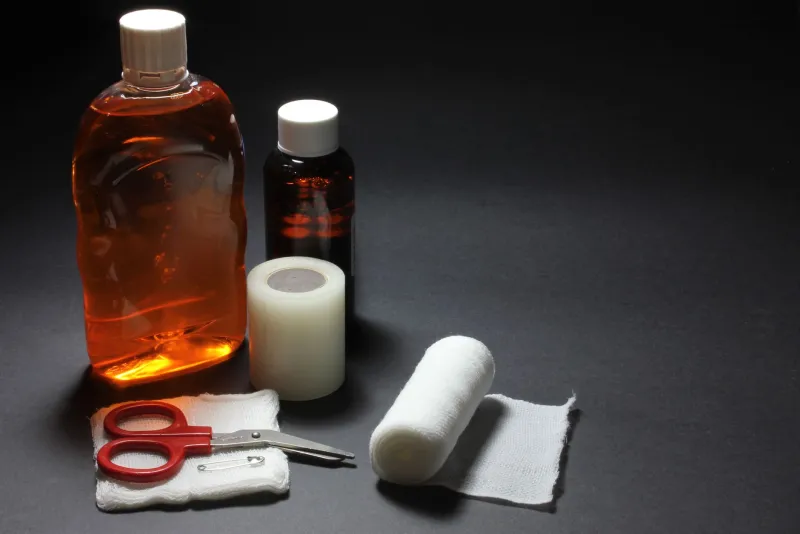
A well-stocked home kit is modest, not a field hospital. Essentials worth keeping on hand include:
- A digital thermometer
- Adhesive bandages in several sizes, plus gauze and medical tape
- An antiseptic for cleaning wounds
- Hydrocortisone cream for itching and minor rashes
- A pain reliever and fever reducer appropriate for everyone in the household, including children's formulations if needed
- Oral rehydration solution or pediatric electrolyte drink mix
- Tweezers, small scissors, and disposable gloves
- Any emergency medications your family requires, such as an epinephrine auto-injector
Store the kit in a cool, dry place — not the bathroom, where humidity and heat accelerate degradation. A hallway closet or kitchen cabinet away from the stove works better. Keep everything well above child height or in a locked box.
Make It a Date
Pair the audit with something memorable. Many families use the daylight saving time changes — the same reminder for smoke detectors — or the first weekend of spring cleaning. Write the date on the calendar and make it a household ritual rather than a chore.
If you have questions about a specific medication, whether it interacts with something else in your cabinet, or how to dispose of a controlled substance, ask at your next appointment or call our office. Our pharmacists and nurses field these questions daily, and no question about safety is a small one.
A few minutes once a year is a small price for a home that is safer for the people who live in it.