Comfort Is Clinical: Why the Design of a Doctor's Office Is Part of Your Treatment
There is a particular kind of dread that arrives in the parking lot of a medical office. It has nothing to do with the diagnosis you might receive and everything to do with the building itself: the fluorescent glare, the rows of mismatched chairs bolted to the floor, the television droning daytime news at a volume nobody asked for. Most Americans have accepted this environment as the price of healthcare. We would like to argue, respectfully, that it shouldn't be.
At I-LL Clinic, we have spent years making deliberate, sometimes unglamorous decisions about how our space and schedule function. The reasoning is simple: a patient who feels calm, oriented, and respected is a patient who communicates better, retains more, and returns when they should. Comfort is not hospitality theater. It is clinical infrastructure.
The Waiting Room Is the First Exam Room
Long before a clinician takes your blood pressure, the environment has already taken your pulse. Harsh overhead lighting and institutional acoustics raise baseline stress, and stress measurably distorts the visit — patients underreport symptoms, forget questions, and rush through concerns they meant to raise.
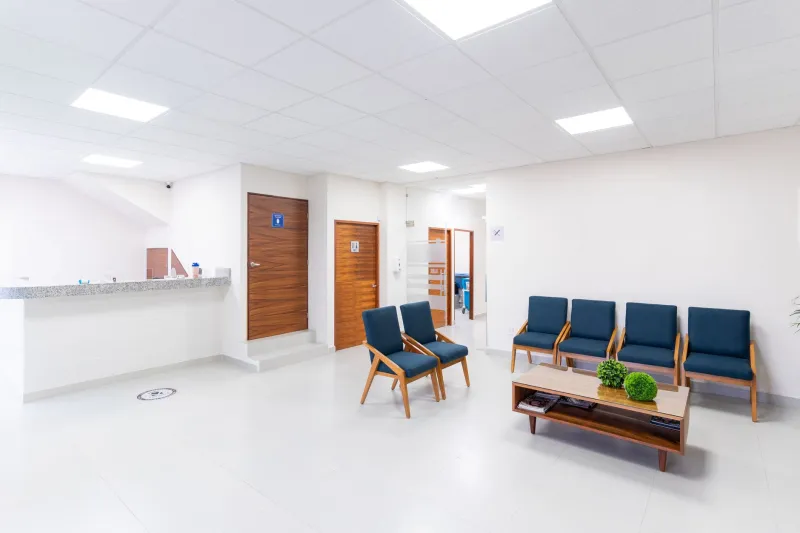
So we started with the basics. Warm, layered lighting instead of a single bank of ceiling fluorescents. Chairs arranged in small groupings rather than airport-style rows, so a nervous patient isn't seated face-to-face with a dozen strangers. A quiet corner with softer seating for anyone who needs a moment of privacy — which, on any given day, is more people than you might guess.
None of this required exotic budgets. It required deciding that the first five minutes of a visit matter as much as the last fifteen.
The Schedule Is a Design Document Too
Physical comfort is only half the story. The other half is time.
We build small buffers into our daily schedule. This is an unpopular decision in most business reviews of medical practice, because buffers mean fewer visits per day. But a clinician who is not sprinting behind schedule can look you in the eye, sit down instead of standing at the door, and let a difficult question hang in the air for a moment without checking a watch. Patients can feel the difference between a doctor who has thirty seconds and one who has ten minutes — and honestly, so can the doctor.
Our front desk staff also introduce themselves by name when they call you back, and clinicians close the loop by explaining what happens next before you leave. These are small rituals, but rituals are how institutions communicate values.
What You Should Expect From Any Practice
This is where our opinion piece becomes, we hope, a useful checklist. Whether you visit us or another practice across the country, here is what we believe every patient is entitled to demand:
- A space that doesn't punish you for showing up. Reasonable lighting, tolerable noise, seating that acknowledges you are a person and not a unit.
- Time that is protected. If a practice routinely runs forty minutes behind, that is not bad luck; it is a scheduling philosophy, and you are bearing its cost.
- Names, not numbers. Staff who introduce themselves, clinicians who remember the thread of your last conversation.
- Clear wayfinding. You should never feel lost on the way to the restroom, the lab, or the exit.
Comfort Is a Form of Communication
Skeptics will say this is cosmetic — that what matters is the medicine, not the wallpaper. We disagree with the framing. The environment of a clinic is a message, sent before anyone speaks. A space that says you were expected here lowers the barrier to honest conversation. A space that says take a number raises it.
Medicine happens between people, in rooms, at particular moments. Design those rooms with care and the medicine gets a fair chance to work. That is the philosophy behind every chair, every buffer, and every name spoken at our front desk — and it is the standard we encourage you to hold any clinic to, including this one.