Who Is Treating You Today? A Field Guide to the Faces in the Exam Room
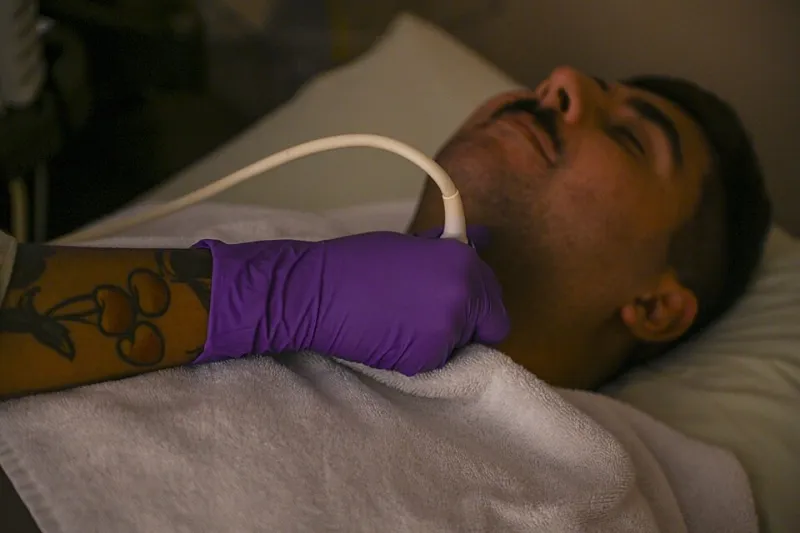
Photo: U.S. Air Force photo by Senior Airman Haiden Morris, Public domain, via Wikimedia Commons
A visit to a clinic rarely involves just one person. From the moment you check in to the moment you leave, a small cast of professionals may take part in your care — and for many patients, that raises a quiet but reasonable question: who, exactly, is treating me?
The confusion is understandable. Titles like nurse practitioner, physician assistant, and medical assistant sound similar, and the person who spends the most time with you is often not the physician. But this layered approach to care is not a shortcut. It is a deliberate model — and knowing who does what can help you get more out of every appointment.
The Medical Assistant: Your Visit Begins Here
The first face you typically see is a medical assistant, or MA. MAs handle the clinical groundwork: recording your vital signs, confirming your medication list, and noting the reason for your visit. Their training is focused and practical, usually completed through a certificate or associate program.
While MAs are not licensed to diagnose or prescribe, the information they gather shapes everything that follows. An accurate medication list and a clear description of your symptoms make the rest of the visit more efficient and more precise.
The Nurse: Assessment and Advocacy
Registered nurses (RNs) and licensed practical nurses (LPNs) bring formal clinical training to your visit. Nurses often handle injections, wound care, chronic disease monitoring, and patient education. They are also frequently the ones who field your phone calls between appointments — which means they play a larger role in your day-to-day health than many patients realize.
The Nurse Practitioner: Diagnosis and Prescribing Authority
A nurse practitioner (NP) holds a graduate degree and is licensed to diagnose conditions, order and interpret tests, and prescribe medications — including controlled substances in most states. Many NPs specialize in family practice, pediatrics, or geriatrics, and in many states they practice independently.
If you see an NP for a sore throat, a blood pressure follow-up, or a chronic condition like diabetes, you are seeing a clinician with full diagnostic authority. NPs also tend to emphasize prevention and patient education, which can make visits feel more conversational and less rushed.
The Physician Assistant: A Close Clinical Parallel
A physician assistant (PA) completes a master's-level program modeled on medical education and must pass a national certification exam. PAs diagnose illness, develop treatment plans, prescribe medications, and in many settings assist in surgery.
One structural difference matters to patients: PAs practice in collaboration with a physician, though the degree of supervision varies by state. In practice, a PA may manage most of your care with a physician available for consultation on complex cases.
The Physician: Complex Diagnoses and Oversight
Physicians — MDs or DOs — complete medical school plus residency training, giving them the deepest preparation for complex, multi-system, or ambiguous cases. In a clinic setting, physicians often handle the most complicated presentations, oversee the broader care team, and serve as the resource other clinicians turn to when a case takes an unexpected turn.
Seeing an NP or PA for a routine visit does not mean you are receiving lesser care. It means the team is deploying its expertise deliberately — reserving the physician's attention for the cases that need it most.
The Technicians: The Specialists Behind the Results
Rounding out the team are the technicians — phlebotomists who draw your labs, radiologic technologists who take your X-rays, and lab technicians who run and verify your results. Their work is often invisible to patients, yet the accuracy of a diagnosis frequently depends on it.
Why the Team Model Works in Your Favor
Team-based care exists for a practical reason: demand for primary care in the United States outpaces the supply of physicians. By distributing work across a trained team, clinics can offer shorter waits, longer availability, and same-day appointments that a physician-only model could not sustain.
The model also builds in a second layer of safety. When an NP, PA, or nurse handles your care, a physician is typically available for consultation — meaning your diagnosis has been informed by more clinical minds, not fewer.
How to Be an Informed Patient
You do not need to memorize credentials to benefit from this knowledge. A few habits help:
- Ask who you are seeing and why. A simple "Will I be seeing the physician today, or a nurse practitioner?" is a fair and welcome question.
- Direct clinical questions to the clinician. MAs are excellent at logistics but cannot answer diagnostic questions.
- Know your follow-up path. Ask who will review your labs and who to call with questions.
- Request a physician consult if you want one. Patients may always ask; the team can usually accommodate or schedule one.
The Bottom Line
The name on the clinic door is only one part of your care. Behind it stands a team of trained professionals, each with defined skills and legal scope, working from a shared record and a shared responsibility for your health. Understanding who does what turns a confusing parade of faces into something clearer: a coordinated system designed to see you sooner, listen longer, and treat you well.