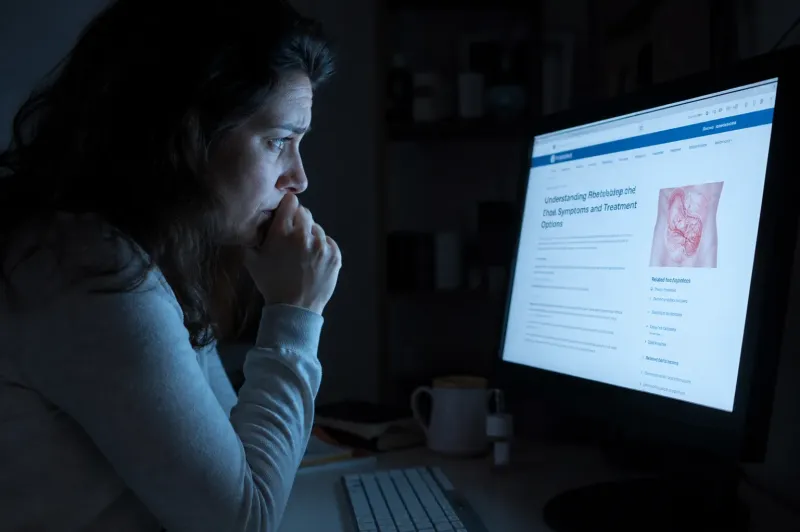
The Appointment You Keep Postponing: Understanding Why Adults Avoid the Doctor

Photo: adult hesitant doctor appointment waiting room, via img.freepik.com
Ask any primary care practice how many adults on their roster have not been seen in three years, and the number is often startling. Nationwide surveys consistently show that a large share of American adults delay or skip recommended care—not because they lack insurance in every case, and not because they are unaware something might be wrong, but because a cluster of very human obstacles stands between them and the front desk.
Understanding those obstacles is the first step to dismantling them. What follows is an honest look at the most common reasons adults avoid medical care, paired with realistic strategies for each.
"It'll Probably Pass" — The Optimism Trap
The human brain is remarkably good at minimizing threats that feel inconvenient. A persistent cough becomes allergies. Chest discomfort becomes indigestion. A mole that has changed becomes nothing. This instinct, sometimes called "normalizing," protects us from daily anxiety but can quietly transform a treatable condition into an emergency.
The counter-strategy: Adopt a simple threshold rule. If a symptom lasts longer than two weeks, recurs, or interferes with sleep or work, it has earned an appointment—regardless of how explainable it seems. You are not diagnosing yourself by going in; you are simply letting a professional do the diagnosing instead.
"I Can't Afford It" — When Cost Confusion Becomes a Barrier
Financial fear is one of the most powerful deterrents to care, and it is often based on guesswork rather than information. Many adults assume a visit will cost far more than it actually will, or they confuse the price of an office visit with the price of a hospital stay.
The counter-strategy: Get specific before you decide. Call the clinic's billing office and ask for a good-faith estimate for a standard visit—federal law requires most providers to supply one on request. Ask whether a sliding scale, payment plan, or telehealth option is available. For many patients, the cost of a preventive visit is far lower than expected, and dramatically lower than the cost of treating an advanced condition later.
"I'm Afraid of What They'll Find" — Avoidance as Self-Protection
Perhaps the least discussed reason for skipping care is also the most common: fear of bad news. Some people reason, consciously or not, that as long as they don't know, nothing is truly wrong. Psychologists recognize this as a form of avoidance coping, and it tends to intensify the longer a person has been away from care.
The counter-strategy: Shrink the stakes. You do not have to schedule a full physical as your return visit. Start with something small and low-pressure—a blood pressure check, a follow-up on a refill, a telehealth conversation about a minor concern. Each small, uneventful visit teaches your nervous system that the clinic is not a place where catastrophe happens. It is a place where questions get answered.
"The Last Visit Went Badly" — Carrying Old Experiences Forward
A rushed appointment, a dismissive comment, a decade-old experience of feeling unheard—negative encounters with the healthcare system leave lasting impressions. For some patients, one bad visit is enough to justify years of absence.
The counter-strategy: Recognize that a past experience describes a moment, not a system. If a previous provider did not listen, the solution is not to give up on care but to find a practice where communication is a priority. When you call a new clinic, it is entirely reasonable to say: "I've had frustrating experiences before, and I want a provider who takes time with patients." That sentence sets expectations from the first interaction.
"I Don't Have Time" — The Logistics Excuse
Sometimes the barrier really is scheduling. Between work, caregiving, and commuting, a two-hour midday appointment can feel impossible.
The counter-strategy: Ask about early-morning, evening, or weekend slots—many clinics now offer them. Telehealth can handle follow-ups, medication reviews, and minor concerns without leaving your desk. And consider that the time spent managing a small problem now is almost always less than the time lost to a major one later.
Breaking the Cycle Starts With One Visit
Avoidance is a habit, and like any habit it weakens with contrary action. The goal is not to transform into a model patient overnight. The goal is to schedule one appointment—one low-stakes, fifteen-minute conversation with a provider.
Bring a list. Ask your questions. Leave with a plan. Patients who take that single step frequently report the same thing: the dread was heavier than the visit itself.
Your health is not a problem that solves itself by being ignored. It is a relationship, and like any relationship, it begins by showing up.